
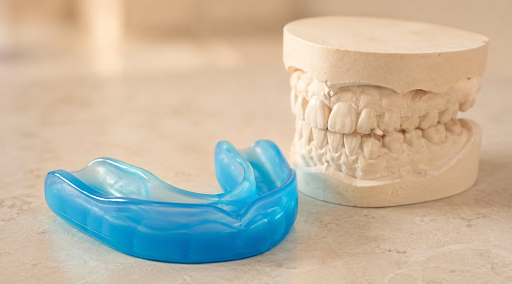
A custom-fitted oral device worn during sleep, that is basically what helps with breathing interruptions caused by sleep apnoea, and its job is to gently push the lower jaw forward so the airway stays open. This treatment, known as a mandibular splint for sleep apnoea, is among the non-surgical options doctors recommend most often for people who have mild to moderate obstructive sleep apnoea. The way it works is simple: it stops the soft tissues at the back of the throat from collapsing while a person sleeps. Many people notice a real difference in their breathing, snoring, and quality of rest once they start using it.
How Does This Device Work?
Over the upper and lower teeth, the device fits somewhat like a mouthguard, though the purpose is different, it is made to hold the jaw slightly forward. When the jaw sits in this forward position, more space opens up in the throat, and this lowers the chances of the airway getting blocked during sleep. Because the tongue connects to the lower jaw, pushing the jaw forward also pulls the tongue away from the throat, which helps air move more freely.
These devices are not like the generic mouthguards found in stores. They get custom made from dental impressions, so the fit stays precise and comfortable, without shifting around at night.
Who Can Benefit From This Treatment?
Generally, this therapy suits people who fall into these groups:
- Those diagnosed with mild to moderate obstructive sleep apnoea
- People who snore heavily but their apnoea is not severe
- Individuals who find it hard to tolerate continuous positive airway pressure therapy
- Anyone who wants a treatment option that is portable and needs little maintenance
For severe sleep apnoea cases, this may not be the first option, since stronger treatments are usually needed there. To know whether this option fits a person’s situation, a proper sleep study along with a consultation becomes necessary.
What Does the Fitting Process Involve?
Usually, the process starts with checking the jaw structure, how the teeth align, and the general condition of oral health. After that, impressions or digital scans of the teeth get taken, and from these, a device gets created that matches the mouth precisely. Once the device is ready, adjustments happen gradually until the jaw position that reduces breathing disruptions is found, without causing too much discomfort.
In the early stages, follow-up visits are common, mainly to fine-tune the fit and check how the device is performing.
Is It Comfortable to Wear Every Night?
From person to person, comfort levels differ, especially during the first few nights. Some things people commonly experience early on include:
- Some soreness or tightness around the jaw
- A bit of extra saliva
- Pressure felt on the teeth
Usually, within one or two weeks, these effects start easing as the mouth gets used to it. Once people adjust to sleeping with the device, most say it becomes far less noticeable than they expected.
Can It Fully Cure Sleep Apnoea?
This question comes up often, and the answer is fairly simple. Rather than curing the condition, oral devices manage its symptoms. By keeping the airway open, breathing pauses reduce and sleep quality improves, but if the device stops being worn, the condition can return. Long-term, managing the condition well often depends on wearing the device consistently every night, along with healthy habits like keeping a stable weight and sleeping on one side.
How Long Does the Device Last?
Depending on how well it is cared for, these devices generally last somewhere between two and five years, and this also depends on material quality and how often it gets used. To keep the device working well and lasting longer, regular cleaning, storing it dry, and visiting the dentist periodically all help. Because teeth and jaw structure change naturally over time, the fit may need adjusting eventually, so periodic reviews matter.
What Are the Signs It Is Working?
Some improvements that people often notice include:
- Snoring becoming quieter or reducing altogether
- Waking up less during the night
- Feeling more rested when morning comes
- Daytime drowsiness reducing
If, after using it consistently, these improvements do not show up, then a follow-up sleep evaluation may be needed to check how effective the treatment actually is.
Final Thoughts
When it comes to disrupted sleep and breathing difficulties, many people find that a mandibular splint for sleep apnoea works as a practical, comfortable, and non-invasive way to manage their symptoms and get better rest at night. Although it does not remove the underlying condition completely, using it consistently, along with a proper fit and regular monitoring, can bring real improvement in both sleep quality and energy during the day. If someone keeps experiencing snoring, pauses in breathing, or feels unusually tired throughout the day, getting a professional evaluation would help them figure out whether this treatment suits their needs.