
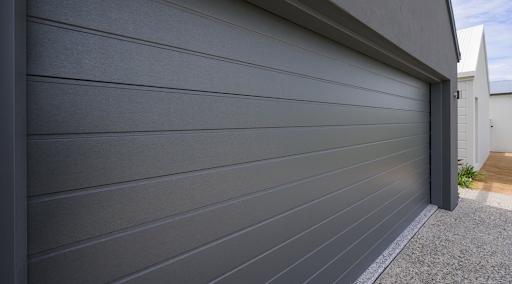
Among all the garage door styles used in homes and commercial buildings, one type that people prefer the most is sectional garage doors, mostly because of the space they save, the insulation quality they carry, and the smooth vertical way in which they open. A traditional single-panel door, it swings outward while opening, but this type works in quite a different manner altogether. It is made from several horizontal panels, joined with hinges, so that the full door can travel straight upward and move along a track into the ceiling area. Due to this, no part of the door pushes outward at the time of opening or closing, which is why properties having limited driveway space find this option quite suitable.
What Makes This Door Type Different From Others
The real difference between this door and the other types comes mainly from how the movement takes place. It is made of many horizontal sections, and mostly these are built using steel, aluminium, timber, or at times composite material. Once opening begins, each panel bends slightly at the hinge point, and it follows a track that first curves upward, then goes flat along the garage ceiling. Because of such design, once fully opened, the door stays parallel to the ceiling, and by this, free space remains available both inside and outside the garage.
Roller doors, on their part, work in another way, coiling themselves into a small roll placed above the opening. Up-and-over doors, meanwhile, swing outward first before they lift. This design, though, brings together the smooth vertical motion which a roller door has, along with a flatter and more solid-looking panel, and this gives most building exteriors a clean, modern appearance.
Why Is This Door Type So Widely Used
There is one clear reason why these doors get used in such a wide manner, and that is because they manage to balance function, security, and appearance, all at once, together. As panels move straight upward rather than swinging out, cars and people standing near the door do not face any blockage while the door is in operation. It is exactly for this reason that narrow driveways, laneway houses, and even commercial loading areas often prefer this type, more so where space is limited.
Insulation stands as another important factor behind this popularity. A large number of these doors are built with layered panels, and foam core is placed inside these layers, which helps in keeping the garage temperature more balanced. Garages that get used as a workshop, home gym, or additional living space benefit a good deal from this, since heat transfer becomes lower, and outside noise also comes down.
How Does the Opening Mechanism Work
It is a track and spring system, working side by side, which makes this type of door open in the manner it does. Torsion springs are fixed above the door opening, and these balance the panel weight, allowing the door to move with only little resistance. Small rollers, attached to every panel, guide each section while the door opens, moving upward through vertical tracks fixed on both sides of the opening. Near the top part, the track turns horizontal, and this guides the panels further, letting them travel along the ceiling line.
Depending on what setup has been chosen, this whole system can be run either by hand or through a motor working automatically. Automated versions, in most cases, come along with a remote control, a wall switch, or sometimes even a connection to a smart device, so that opening and closing the door requires almost no physical effort.
Is This Door Type Suitable for All Climates
In a majority of cases, this style of door does suit many different climates rather well, and a large part of this comes from its layered panel build together with sealed edges. Between each panel, horizontal seals are placed, and these help in reducing dust, water, and wind that try passing through, which is the reason places having heavy rain or strong wind often find such doors practical. Where the weather turns cold, insulated panels help in holding warmth inside, while in hotter regions, that same insulation prevents heat from building up too much within the garage.
Material choice, too, plays its own role in how well a door suits a particular climate. Steel panels, in general, resist warping and weather-related damage in a fairly good manner, whereas timber panels may require extra care in humid or coastal regions, so that moisture does not get absorbed too easily over the passing of time.
What Affects the Lifespan of This Door Type
How long such a door lasts depends upon a few factors together, such as the quality of material used, how frequently the door gets used, and how properly maintenance work is carried out. Doors made from galvanised steel or aluminium usually tend to last longer, mainly because such materials handle rust and structural stress in a better way. Keeping rollers, hinges, and tracks lubricated on a regular basis also helps in lowering wear, allowing the entire mechanism to keep functioning smoothly across many years.
Where exactly the door gets installed also matters quite a lot. In places having high humidity, salt present in the air, or large swings in temperature, doors may wear out sooner than expected, when compared with doors placed in calmer and more steady surroundings.
To sum up everything, sectional garage doors continue to remain a practical and widely chosen option for both residential and commercial properties, mainly due to how efficiently they use available space, how strongly their insulation performs, and how flexible their overall design turns out to be. The panel and track system used in them is quite unique in nature, and this allows them to fit into spaces where other garage door types may not perform equally well, making them, in the end, a dependable long-term choice across many different kinds of buildings.