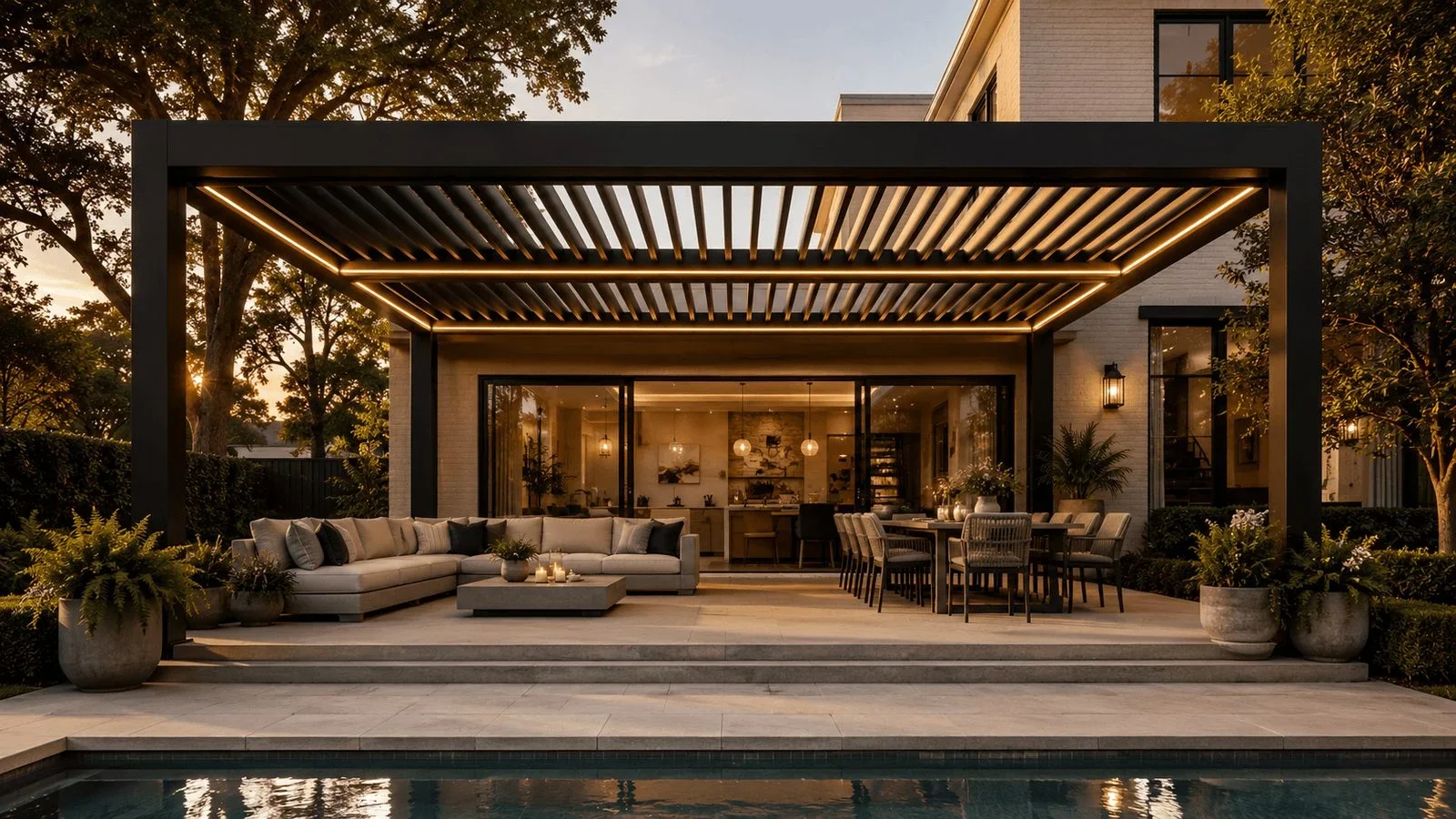
Most homeowners build outdoor furniture areas that become graveyards within months. Expensive couches sit under tarps collecting dust. Cushions fade and deteriorate. The space that seemed perfect during summer design becomes abandoned and depressing by autumn. Nobody admits this failure because it feels embarrassing to have wasted money on furniture nobody uses. A louvred pergola reveals something shocking about why outdoor spaces fail. It’s not about comfort during perfect weather. It’s about protection making outdoor living possible when weather becomes difficult. People don’t avoid outdoor spaces because the weather is perfect. They avoid them when the weather becomes unpredictable and inconvenient. Fixed pergolas create false shelter that stops working the moment conditions change slightly. Louvred structures solve this by actually responding to weather rather than pretending to.
The Moisture Problem
Outdoor furniture experiences constant moisture damage from rain, humidity, and early morning dew that people never think about when purchasing expensive pieces. Cushion fabric absorbs moisture, creating mould and mildew inside filling materials. Wood develops rot starting invisibly inside joints. Metal corrodes from salt air and moisture cycling. Expensive outdoor furniture degrades far faster than people anticipate because moisture damage happens silently and continuously. Standard pergolas provide some roof coverage, but louvers stay open, allowing wind-driven rain reaching furniture underneath. Louvred structures close completely during rain, protecting contents from moisture damage. Homeowners stop replacing ruined furniture every few years once protection actually works. The financial savings from preventing deterioration exceed construction investment quickly.
The Temperature Issue
People assume outdoor spaces are pleasant when the weather is warm. Actually, the problem happens during transition seasons when temperature fluctuates unpredictably throughout single days. Morning feels cold, requiring jackets. Midday becomes hot, creating the need for shade. Evening turns cold again. Traditional pergolas create fixed conditions regardless of temperature changes. Fully open louvers during the morning cold feel unbearable. Closing them for warmth eliminates ventilation, making hot afternoons stifling. Louvred pergolas allow adjustment matching actual temperature at specific moments. Partially open positions create filtered shade and gentle ventilation. Closed positions retain warmth during cold periods. This flexibility means people actually use spaces because comfort remains controllable rather than fixed.
The Wind Challenge
Wind makes outdoor spaces genuinely unusable even during mild temperatures because conversations become impossible and objects blow around, creating hazards. Standard pergolas offer zero wind protection because they’re designed purely for shade and rain. Louvred structures close completely, blocking wind entirely, transforming wind-affected spaces into genuinely usable areas. Homeowners living in windy areas discover that louvred pergolas suddenly make outdoor spaces viable during windy seasons previously considered impossible for outdoor activities.
The Maintenance Nightmare
Fixed pergolas accumulate debris constantly, requiring endless cleaning. Leaves get trapped in traditional slat designs. Gutters fill with debris needing attention. Mould and algae grow on horizontal surfaces. Louvred structures stay cleaner because angled louvers shed debris naturally. Closed louvers prevent debris accumulation when spaces aren’t in use. The reduced maintenance burden means outdoor areas actually stay pleasant rather than becoming seasonal cleaning nightmares that discourage regular usage.
The Seasonal Resurrection
Spaces disappear seasonally because weather changes make them unusable without proper protection and climate control. Spring brings unpredictable temperatures requiring flexible solutions. Autumn brings constant rain, making standard pergolas inadequate for shelter. Late afternoon creates intense sun angles, making shade essential. Louvred pergolas resurrect these dead seasons by providing weather control matching seasonal challenges throughout the year. Autumn evenings become pleasant when wind protection and gentle shade create comfortable conditions for entertaining and relaxation. Winter days with low sun angles become usable when louvers open fully, allowing maximum light penetration and warmth. Spring’s temperature swings get managed through partial louver positions, creating comfort despite fluctuating conditions. Summer heat becomes manageable through strategic louver positioning that allows ventilation without excessive sun exposure causing discomfort.
The Guest Hosting Truth
Entertaining outdoors becomes impossible when weather can’t be controlled, and unpredictable conditions force everything inside. Guests sitting under fixed shade during temperature drops need indoor alternatives, creating inconvenience. Rain forces everything inside, abandoning outdoor entertainment plans entirely. Wind makes conversation difficult and outdoor time unpleasant. Louvred structures allow confident entertaining year-round because weather becomes controllable rather than limiting possibilities. Hosts stop planning indoor alternatives because outdoor spaces remain genuinely functional regardless of seasonal weather patterns. Guests actually choose to stay outside rather than retreat indoors when proper weather protection is available, and comfort is guaranteed.
Conclusion
Installing a louvred pergola solves problems that standard structures ignore completely throughout seasons. Moisture damage, temperature fluctuations, wind exposure, and maintenance nightmares all disappear through adaptive weather control systems. Outdoor spaces become genuinely usable year-round, rather than seasonal furniture storage areas that gather dust. The investment protects existing furnishings whilst creating livable spaces. Furniture stops deteriorating when proper protection prevents silent moisture damage. Entertainment becomes year-round rather than seasonal activity limited by weather restrictions. Homeowners finally enjoy outdoor investments rather than watching them fail seasonally.